
How a 13th-century Sufi master became the best-selling poet in America — and what was lost, then reclaimed, in the translation. A study of Rumi's transmutation through Western culture: from Coleman Barks to Coldplay, Carl Jung to the geopolitics of his legacy.
The 13th-century Islamic scholar, jurisprudent, and mystic Jalaluddin Muhammad Rumi occupies a paradoxical position in the 21st-century cultural landscape. Born in 1207 in Balkh (modern-day Afghanistan) and living out his mature years in Konya (modern-day Turkey), this medieval Sufi master has somehow become a household name in the contemporary West. Dubbed the “best-selling poet in America” by mainstream media, his verses are recited at weddings, posted as inspirational memes on social media, sampled by pop-music icons, and woven into modern psychotherapeutic practice.
Yet this widespread popularity raises critical questions about cultural transmission, translation ethics, and spiritual commodification. The contemporary global fascination with Rumi — often termed “Rumimania” by cultural historians — is not a static transmission of an ancient text. It is a profound cultural transmutation. Rumi has been refracted through the lens of Western individualism, systematically stripped of his specific Islamic scaffolding, and rebuilt as a pluralistic, New Age icon.
This long-form study explores the many dimensions of Rumi’s influence on modern culture. It tracks his journey from classical Islamic mysticism to Western bestseller lists, analyses the fierce debates surrounding the erasure of his religious context, examines his place in the digital landscape and the performing arts, and details the geopolitical battles fought over his enduring legacy.
The Invention of an American Bestseller
To understand Rumi’s modern cultural footprint, one must first map the linguistic pipeline that carried a medieval Persian Masnavi into the contemporary English lexicon. The Western discovery of Rumi unfolded across two distinct phases: the academic-orientalist period of the late 19th and early 20th centuries, and the radical popularisation movement of the late 20th century.
The Orientalist Foundation
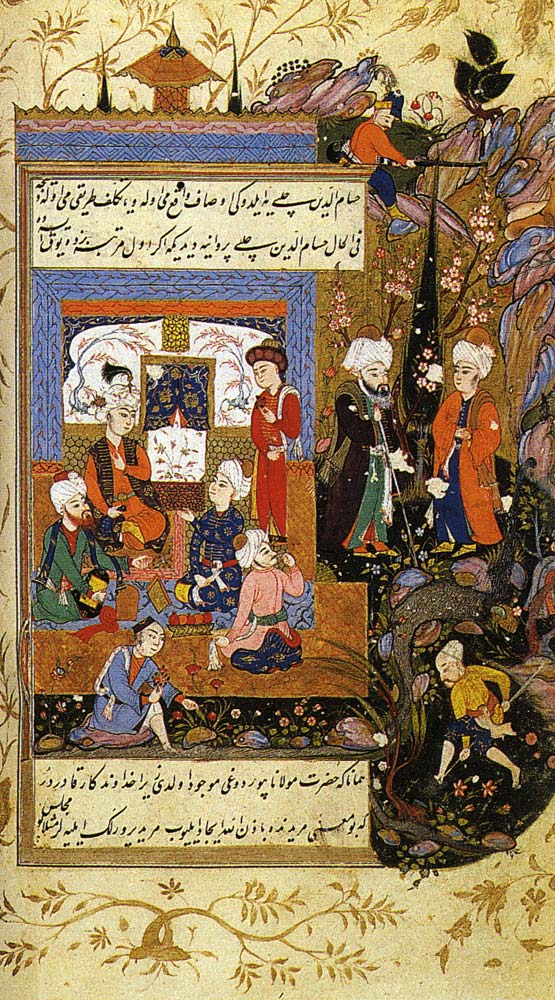
Early Western access to Rumi was governed by rigorous, literalist British academics, most notably Reynold A. Nicholson and his student Arthur John Arberry. Nicholson devoted decades to translating all six books of Rumi’s Masnavi-ye Ma’navi (Spiritual Couplets) into English prose, published between 1925 and 1940. Academically monumental and precise, these translations were syntactically dense, heavy with footnotes, and intentionally archaic. They were aimed at scholars of comparative religion rather than the general reading public. Arberry followed with more poetic attempts, yet the language remained bound to a formal, Victorian idiom that failed to capture the ecstatic, kinetic musicality of the original Persian.
The 1976 Inflection Point
The seismic shift came in 1976, when the American poet Robert Bly handed a copy of Arberry’s translations to fellow poet Coleman Barks. As the literary lore goes, Bly remarked, “These poems need to be released from their cages.” Barks, who neither spoke nor read Persian, began reinterpreting the literal academic translations of Nicholson and Arberry into modern, unrhymed American free verse.
His adaptations struck an immediate nerve within America’s growing “seeker” culture. By removing the formal constraints of 13th-century poetic metre and replacing archaic theological terms with vibrant, direct imagery reminiscent of Walt Whitman, Barks transformed Rumi into an accessible contemporary voice. The publication of The Essential Rumi (1995) became an unprecedented publishing phenomenon, eventually selling over 500,000 copies in an Anglo-American market where poetry volumes rarely surpass a lifetime sale of 10,000.
The Erasure Debate: Universalism versus De-contextualisation
While Barks’s translations democratised Rumi’s work, they ignited a fierce intellectual and cultural counter-movement. In recent decades, scholars, activists, and translators have increasingly criticised the “New Ageing” of Rumi, arguing that his modern popularity is built upon systematic cultural appropriation and the erasure of his Islamic identity.
The De-Islamisation Critique
Scholars such as Omid Safi and the journalist Rozina Ali have argued that mainstream Western translations perform a kind of spiritual colonialism by extracting Rumi from his theological matrix. In the original Persian, Rumi’s poetry is saturated with direct quotations, paraphrases, and allegorical readings of the Quran and the Hadith (the sayings of the Prophet Muhammad). The Masnavi was historically known to Persian scholars as “the Quran in the Persian tongue.”
In popular adaptations, specific Islamic concepts are regularly replaced with vague, universally palatable spiritual terminology:
- Allah or Al-Haqq becomes “The Friend,” “The Beloved,” or “The Divine.”
- Salat (ritual prayer) or Zikr (remembrance) is rendered generally as “meditation” or “mindfulness.”
- Jihad (inner spiritual struggle) is transformed into an abstract journey of “personal growth.”
This de-contextualisation isolates Rumi from the very tradition that generated his ecstasy. It quietly implies that a Muslim intellectual could not have authored such inclusive, deeply humanist poetry without somehow “transcending” his own religion.
Comparative Textual Analysis
The structural shifts between a direct, contextually faithful translation and a popularised New Age adaptation become clear when specific verses are set side by side:
| Scholarly / direct (Mojaddedi, Lewis) | Popularised (Coleman Barks) | |
|---|---|---|
| Theological anchors | Preserves references to the Quran, Islamic law, and explicit prophetic narratives. | Strips specific dogma to foreground raw emotional and psychological archetypes. |
| Linguistic fidelity | Translates directly from classical Persian idioms, retaining cultural metaphors. | Works from English secondary texts, substituting Western poetic tropes. |
| Spiritual outcome | Shows how ecstatic love (’Ishq) functions as the fulfilment of Islamic devotion. | Presents love as an autonomous, non-institutionalised alternative to formal religion. |
Consider Rumi’s famous Quatrain 1173. In popular culture, a line attributed to Barks reads:
Out beyond ideas of wrongdoing and rightdoing, there is a field. I’ll meet you there.
Coleman Barks’s rendering
This has become a hallmark of modern pluralism, printed on thousands of greeting cards and lifestyle products. The literal Persian, however, reads closer to:
Beyond infidelity [kufr] and faith [islam], there is a desert plain. In that space, our passion thrives. The mystic who reaches that place lays down their head, for there is neither heresy nor orthodox belief.
A literal rendering of Quatrain 1173
While the core sentiment remains tethered to a transcendent spiritual state, the original explicitly uses the legal-theological language of kufr and islam. Rumi was not arguing for an amoral, secular playground; he was describing an advanced Sufi station of Fana (annihilation of the ego), where the dualistic categories of the human intellect dissolve into the absolute unity of the Divine (Tawhid).
The Reclamation Movement
In response to this erasure debate, a new generation of bilingual translators and scholars has risen to reclaim Rumi’s historical identity while preserving his poetic brilliance. Translators such as Jawid Mojaddedi (whose rhyming couplet translations for Oxford World’s Classics restore the structural integrity of the Masnavi), Fatemeh Keshavarz, and the poet Haleh Liza Gafori (Gold, 2022) have offered direct translations that honour both the ecstatic pacing of the Persian and its intrinsic Islamic roots.
Furthermore, the publication of Rumi: Unseen Poems (2024) by the biographer Brad Gooch and the Iranian writer Maryam Mortaz set out explicitly to correct past distortions. They introduced previously untranslated ghazals and rubaiyat that balance lyric exuberance with cultural fidelity, demonstrating that Rumi’s universal appeal does not require the erasure of his specific lineage.
Rumi as a Digital Artifact
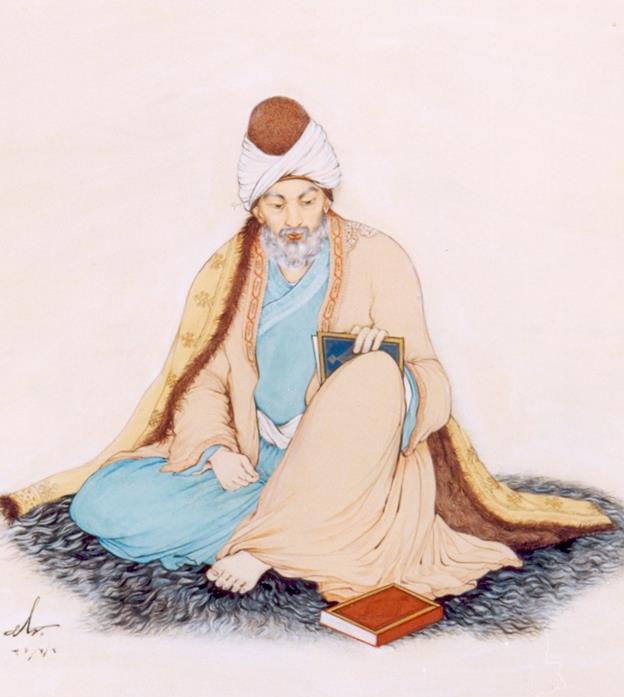
In the 21st century, the democratisation of Rumi has found its apex — and its deepest dilution — on social media. Instagram, Pinterest, TikTok, and X (formerly Twitter) have turned the 13th-century mystic into an internet phenomenon, effectively re-branding him as the world’s first “Instagram poet.”
The Micro-Quote and the Self-Help Flattening
The architecture of social media privileges brevity, visual scannability, and instant emotional validation. Because Rumi’s poetry abounds with striking aphorisms, his work is uniquely suited to algorithmic distribution — and this has flattened a complex spiritual philosophy into digestible, therapeutic platitudes. Consider one of the most widely shared digital quotes attributed to him:
The wound is the place where the Light enters you.
In the digital ecosystem, this phrase is routinely detached from its metaphysical anchor and deployed as a secular self-help slogan celebrating personal resilience or trauma recovery. In its original Sufi context, “the wound” refers specifically to the agony of separation from God, and “the light” is the transformative grace of divine illumination, reached through intentional spiritual poverty (faqr) and the death of the lower self (nafs).
The Phenomenon of “Fake Rumi”
The digital thirst for aesthetic spirituality has also produced a crisis of misattribution. The internet is flooded with millions of graphics bearing quotes attributed to Rumi that he never wrote. Scholars such as Ivan M. Granger have documented how verses by 20th-century Western poets, New Age internet users, or even AI generators are erroneously stamped with Rumi’s name to grant them instant authority. The effect is to reduce “Rumi” from an actual historical author to a generic, open-source brand identity for anyone seeking to express a vague, romantic, or mystical sentiment online.
Echoes in Music, Literature, and the Performing Arts
Beyond literature and the digital sphere, Rumi’s aesthetic energy has penetrated global pop culture, avant-garde music, and contemporary literature, serving as a creative catalyst across many artistic domains.
Pop Culture, Hollywood, and Literature
Rumi’s presence in celebrity culture is itself a metric of his mainstream saturation. In 2017, Beyoncé and Jay-Z named their daughter Rumi, signalling the name’s evolution into a symbol of artistic and spiritual prestige. In the literary world, the Turkish-British author Elif Shafak published The Forty Rules of Love (2010), a dual-narrative novel that weaves a modern story of spiritual awakening with a historical reimagining of the relationship between Rumi and his enigmatic mentor, Shams of Tabriz. It became an international bestseller, further cementing the popular image of Rumi as an icon of universal empathy and transformative love.
Western Avant-Garde and Mainstream Music
Rumi’s verses have proven remarkably adaptable to musical composition, spanning genres from Western classical minimalism to contemporary rock and pop.
Philip Glass. The minimalist composer collaborated with Robert Wilson on Monsters of Grace (1998), an opera of digital 3D imagery set to Coleman Barks’s translations of Rumi’s love poems. Glass chose Rumi because the hypnotic, repetitive, ecstatic structure of the verse mirrored his own musical minimalism.
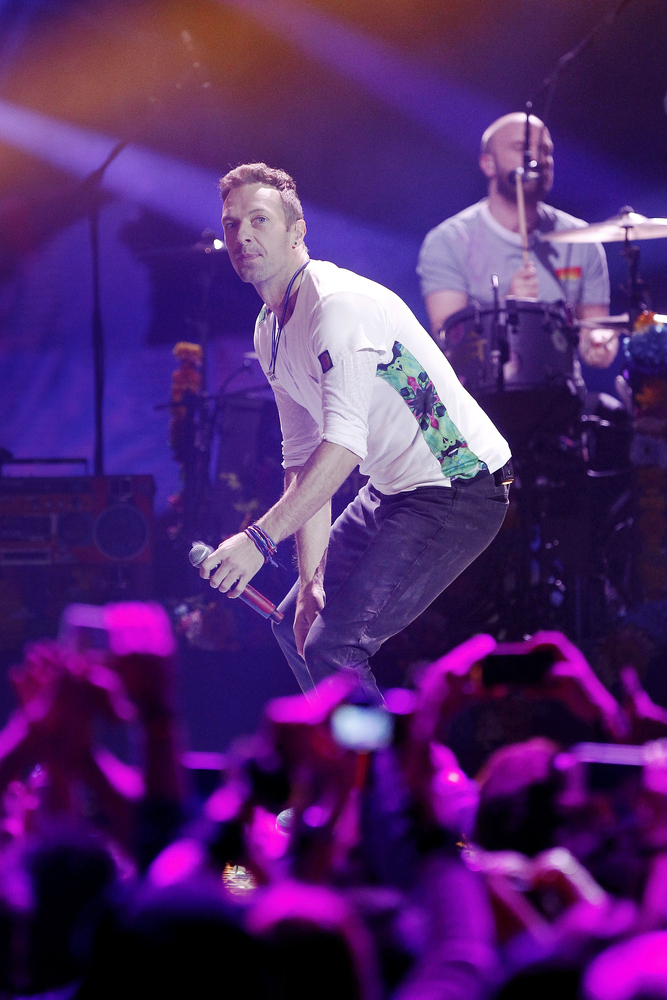
Coldplay. On A Head Full of Dreams (2015), the British band included an interlude titled “Kaleidoscope,” featuring a direct recording of Coleman Barks reciting Rumi’s famous poem “The Guest House.” The inclusion carried Rumi’s therapeutic philosophy of radical acceptance to millions of listeners.
Madonna and Deepak Chopra. In 1998, Deepak Chopra produced the album A Gift of Love: Music Inspired by the Love Poems of Rumi, featuring high-profile artists — including Madonna — reciting Barks’s translations over contemporary electronic and ambient beats. Madonna’s sensual reading of “The Secret Garden” highlighted the modern blurring of divine mysticism with earthly, erotic romance.
The Evolution and Commercialisation of the Sama
Rumi’s most visible contribution to the performing arts is the Sama, the sacred ritual of the Mevlevi Sufi Order, known in the West as the Whirling Dervishes. Designed by Rumi and formalised by his son, Sultan Walad, the Sama is a highly structured kinetic prayer in which dervishes spin to the music of the ney (reed flute) and kudüm (drum), symbolising the soul’s cosmic ascent through love to divine reality.
In modern culture, the Sama has undergone a profound transformation. While still preserved as a sacred rite by practitioners worldwide, it has simultaneously been repurposed as a global touring art form, performed on secular stages from London to New York; as a soft-power tourist attraction, with shortened versions staged nightly in Istanbul and Konya for international travellers; and as a secular therapeutic practice, adapted by somatic movement teachers as a tool for grounding, trance work, and psychological integration, stripped of its theological requirements.
Psychological and Therapeutic Echoes
One of the most profound intersections of Rumi’s work with modern culture occurs within depth psychology, the mindfulness movement, and the “Spiritual But Not Religious” (SBNR) demographic.
Rumi and Jungian Psychology
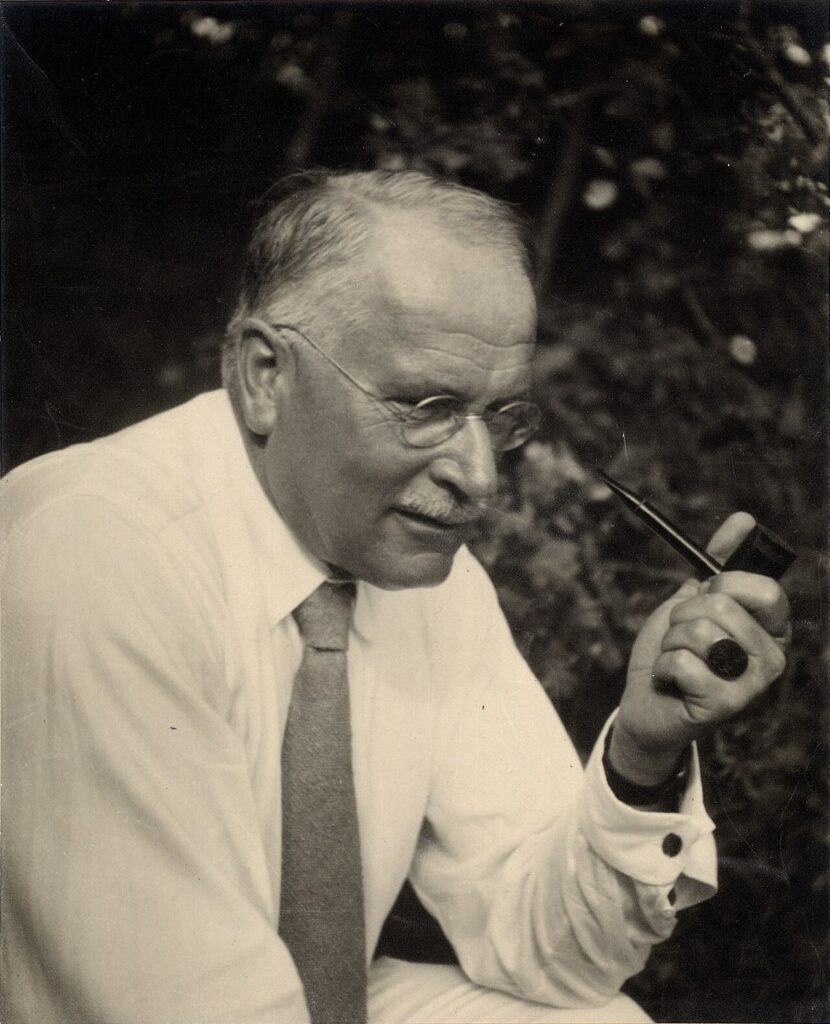
Long before Rumi was a commercial success, his writing caught the attention of pioneering psychologists who recognised his deep understanding of the human subconscious. Analysts have noted striking parallels between Rumi’s poetic insights and Carl Jung’s theories on the integration of the shadow, the individuation process, and the collective unconscious. Rumi consistently treats internal psychological turmoil not as pathology but as a mandatory, alchemical process required for spiritual maturation — closely mirroring Jung’s belief that psychological suffering holds the key to psychic wholeness.
The Therapeutic Adoption of “The Guest House”
In modern clinical psychology, mindfulness-based stress reduction (MBSR), and trauma-informed therapies, Rumi’s poem “The Guest House” has achieved canonical status. The poem instructs the reader to treat every passing emotion — malice, depression, or shame — as an unexpected visitor to be welcomed and entertained:
Welcome and entertain them all! / Even if they’re a crowd of sorrows, / who violently sweep your house / empty of its furniture…
Rumi, “The Guest House”
Mental-health professionals routinely use these verses to teach the principles of radical acceptance and emotional agility. Rather than suppressing difficult emotions, patients are encouraged to see them through Rumi’s lens: as divine messengers sent for internal refinement. This psychological utility has secured Rumi a permanent place in the modern wellness industry, bridging medieval mysticism and clinical behavioural science.
Geopolitics of a Legacy: the Battle for Ownership
While Western culture consumes Rumi as an individualist spiritual resource, the Middle East regards him as a monumental figure of cultural heritage and national pride. This divergence has turned Rumi into an active battleground for soft power, nationalism, and geopolitical posturing.
The Tri-National Ownership Dispute
Because Rumi lived a highly migratory life across borders that no longer exist, three modern nation-states actively claim him as their own national poet.
Afghanistan celebrates him as Jalāl ad-Dīn Muhammad Balkhī, emphasising his birth in the historic region of Balkh, and argues that his foundational language, heritage, and early education were rooted entirely in Greater Khorasan.
Iran claims him as one of the supreme masters of classical Persian literature. Because nearly the whole of Rumi’s vast corpus — the Masnavi and the Diwan-e Shams — was composed in Persian, Iran views his legacy as an inseparable pillar of its cultural civilisation.
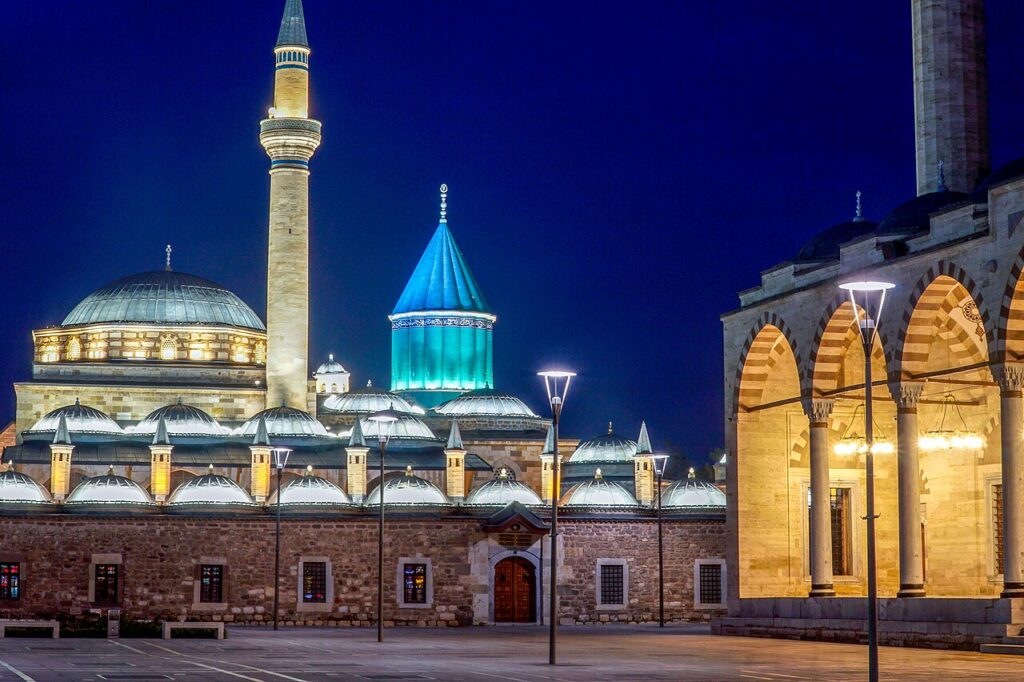
Turkey knows him affectionately as Mevlânâ. Since Rumi spent the majority of his adult life in Konya, produced his greatest works there, and died there, the Turkish state considers his legacy a centrepiece of its historical identity. The Mevlevi Order was organised and preserved for centuries under the patronage of the Ottoman Empire.
This competition escalated into diplomatic tension when Iran and Turkey jointly submitted a proposal to UNESCO to register Rumi’s Masnavi as shared cultural heritage, sparking fierce protests from cultural ministries in Afghanistan, who demanded equal recognition of his historical lineage.
Post-9/11 Geopolitics and the “Good Muslim” Narrative
On a broader geopolitical scale, Rumi’s Western popularity has been used as an ideological tool in the post-9/11 era. Cultural critics have noted that Western political and media establishments frequently invoke Rumi’s pacifist, universalist love poetry to construct a narrative of the “Good Muslim” — peaceful, tolerant, mystical, and fundamentally apolitical.
The result is an ironic cultural dissonance. Western societies widely consume, profit from, and praise the poetry of a 13th-century thinker from the Middle East, while simultaneously enforcing restrictive immigration, surveillance, and military policies toward the contemporary inhabitants of Afghanistan, Iran, and Syria — the very lands that birthed Rumi, his family, and his spiritual lineage.
The Unchained Mystic
Jalaluddin Rumi’s journey through modern culture is a testament to the enduring power of his spiritual vision. He has survived the collapse of medieval empires, migration across continents, the transition from manuscript scrolls to Instagram feeds, and the corporate flattening of the modern wellness industry.
While the commercialised, New Age iteration of Rumi often resembles a mirror reflecting the desires of a hyper-individualistic, secularised Western public, the true depth of his work remains unchained. The current decolonial translation movement, alongside rigorous scholarship, is successfully reintroducing global audiences to the historical Rumi: a deeply devout Muslim jurist whose radical, ecstatic encounter with divine love did not bypass his religious tradition but exploded directly from its core.
Ultimately, Rumi’s influence endures because he addresses the foundational ache of the human condition. Whether read on a smartphone screen as a fragmented quote or chanted in a candlelit Sufi lodge in its original Persian metre, his voice continues to serve as an ecstatic bridge — spanning centuries, geographies, and dogmas to remind a fragmented world that the ultimate human destination is love.
References
- Ali, R. (2016). The Erasure of Islam from the Poetry of Rumi. The New Yorker.
- Arberry, A. J. (1961). Tales from the Masnavi. Allen & Unwin.
- Barks, C. (1995). The Essential Rumi. HarperSanFrancisco.
- Gooch, B. (2017). Rumi’s Secret: The Life of the Sufi Poet of Love. Harper.
- Gooch, B., & Mortaz, M. (2024). Rumi: Unseen Poems. Everyman’s Library / Penguin Books.
- Gafori, H. L. (2022). Gold: Poems by Rumi. HarperOne.
- Keshavarz, F. (1998). Reading Mystical Lyric: The Case of Jalal al-Din Rumi. University of South Carolina Press.
- Lewis, F. D. (2000). Rumi: Past and Present, East and West. Oneworld Publications.
- Mojaddedi, J. (2004). The Masnavi: Book One. Oxford World’s Classics.
- Nicholson, R. A. (1926). The Mathnawí of Jalálu’ddín Rúmí. Gibb Memorial Trust.
- Safi, O. (2018). Radical Love: Teachings from the Islamic Mystical Tradition. Yale University Press.
- Sedaghat, A. (2024). Translating Rumi into the West: A Linguistic Conundrum and Beyond. Routledge.
- Shafak, E. (2010). The Forty Rules of Love: A Novel of Rumi. Viking.